
Kayfabe is the tacit agreement between professional wrestlers and their fans to act as if openly staged wrestling events, stories, and characters are real.— Merriam-Webster Dictionary
Kayfabe – Pretending It’s Real and Not Talking About It
We all know wrestling icons like Hulk Hogan or John Cena. And we all know the fights are staged. It’s theatre, not sport. WWE even changed its name from “World Wrestling Federation” to “World Wrestling Entertainment.” Yet we still watch. Former wrestler Nick Rogers recently said:
“We’ll present you something clearly fake under the insistence that it’s real, and you will experience genuine emotion. Neither party acknowledges the bargain, or else the magic is ruined.”
This illusion—where everyone silently agrees to act like something fake is real—is called ‘kayfabe’.
We pay for the illusion
Interest in WWE didn’t decline when it was clear it was al staged. That’s because kayfabe is how the wrestlers show respect for their audience. They understand well that if fans pay for the illusion, we preserve it respectfully.
Kayfabe has thus become the way to protect the business model. We pay for an act. We love illusion. Just like in film. Kayfabe leads to emotional involvement.
‘Kayfabe is never stop selling the gimmick’ — Al Snow
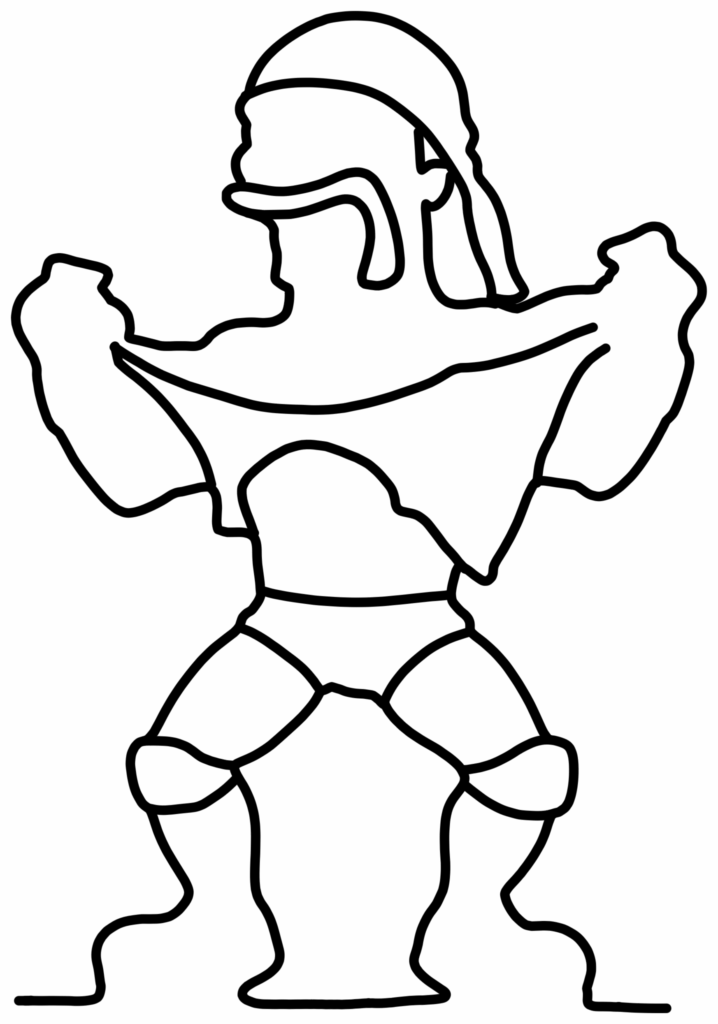
By maintaining kayfabe, we keep doing what we did. Kayfabe is about protecting the status quo, even when we know it’s not real.
Kayfabe is silence
Kayfabe today symbolizes keeping reality hidden from the outside world. Letting outsiders believe that what you show is real. We see it all around us. On social media, everyone has the perfect vacation. The sun always shines. Kayfabe is politicians with no active memory. Accidentally leaked plans for Budget Day. The omertá in cycling (silence about doping). We know we’re fooling each other, and we stay silent.
‘Kayfabe is the tacit agreement between professional wrestlers and their fans to act as if openly staged wrestling events, stories, and characters are real.’— Merriam-Webster Dictionary
Kayfabe safety
The parallel to our safety practices is striking. We also perform safety. We go through the motions — procedures, reports, checklists — not because they work, but because it gives the illusion of control. Like wrestlers, we stay silent about what we know to be fake. Various struggles as described throughout this website, we solve with kayfabe. We create the illusion and remain silent about it.
As Goffman (1956, 2022) stated: In daily life and in organizations, people perform roles — consciously or unconsciously — to shape how others perceive them. Drawing from Goffman’s theory, we use cues like appearance, setting, and manner to project identities and manage impressions. Our behaviour shifts between a public polished appearance and our authentic, private (hidden) behaviour.
Teams collectively maintain these performances, often hiding errors or backstage realities to preserve harmony, especially when roles overlap or audiences have conflicting expectations.
In safety management, these dynamics matter. Surveys meant to assess safety culture or compliance can be skewed by impression management—employees may overstate compliance out of fear of consequences.
“People don’t want the truth. They want what makes them feel safe.” — Zadie Smith
Some organizations use surveys to measure constructs like safety knowledge, climate, culture and compliance. This can quickly lead to inaccurate portrayals of workplace safety. For instance, relationships between safety knowledge and compliance are very much influenced by impression management. Employees exaggerate compliance due to fear of repercussions, such as remedial training or management actions. We often present idealized versions of ourselves to fit societal values and expectations, and conceal aspects that might disrupt the desired image.
“The reward for conformity is that everyone likes you but yourself.” — Rebecca Solnit
Suppressing uncertainty and anxiety
Drew Rae argued in his keynote ‘False Assurance’ at the ‘EHS Congress 2024’ in Berlin that the primary goal of our safety work is not the safety of the work, but reducing tension and worries about unsafety. He states that our work for safety revolves around suppressing the feeling of uncertainty. That leads to showing that everything is under control. Many things we do in the name of safety is to demonstrate that it’s safe. ‘Demonstrated Safety.’ It is designed to appear safe, not necessarily to be safe. That insight is a game changer.
‘The problem is not the presence of ill intentions, but the absence of critical thinking.’ –– Hannah Arendt
Willful Blindness
Margaret Heffernan (2011) introduced the term ‘Willful Blindness’, also known as ‘Conscious Avoidance’. It means knowingly turning a blind eye to something, even if you have strong suspicions about it. We turn a blind eye in order to feel safe, to avoid conflict, to reduce anxiety and to protect prestige. It makes us feel good at first, with consequences we don’t see or want to see. Heffernan argues that the biggest threats we face are the ones we don’t see—not because they’re secret or invisible, but because we’re willfully blind to suppress our uncertainty.
“We may not be able to see what’s in front of us, not because it’s invisible, but because we are unwilling to confront it.” — Margaret Heffernan
Who is fooling whom?
As they say in wrestling: with kayfabe you sell the result. The result we sell each other is the illusion that we are safe and resilient. With kayfabe we maintain a pseudo-reality. We are in a status quo. Everyone pretends the work for safety is real and we don’t talk about it. But why should we keep that going? With kayfabe we don’t make anyone wiser. Kayfabe doesn’t make us safer, more resilient, or more successful.
“The world is not dangerous because of those who do harm, but because of those who watch and don’t do anything about it.” — Albert Einstein (loosely citated)
More troubling is what sociologist Riesman (2024) recently dubbed “neo-kayfabe” — the spreading confusion between truth and illusion in modern society. With AI, deepfakes, social unrest, and misinformation, it’s getting harder to tell what’s real. The same is true inside our organisations. We see through the illusion, yet say nothing. It’s becoming less clear when we’re being fooled and when we’re seeing reality.
“There are two ways to be fooled. One is to believe what isn’t true; the other is to refuse to believe what is true.” — Søren Kierkegaard
Moral friction
Maintaining kayfabe leads to ‘moral friction.’ More and more people are aware of kayfabe in their organizations and of their role in it. The more we talk about this, the more it feeds the feeling that we contribute to deception, distrust, pseudo-certainty, and a culture of silence. And above all, it leads to less success, less quality, less safety. Hence the moral doubt. How long do we want to keep fooling each other?
“It is difficult to get a man to understand something, when his salary depends on his not understanding it.” — Upton Sinclair
Honesty, Candor and Trust
Honesty, candor and trust are what we humans need—in our daily lives and in our organizations. Unexpected events happen continuously. Every day brings new surprises we must deal with. We don’t live in a simple world. On the outside we have wars, inflation, shortages, climate crises, migration crises, energy-crises, indecisive governments, to name few. On the inside we have employee burnout, staff turnover, broken promises, missed targets, disengaged teams, demanding clients, failing suppliers, pushing boards of directors.
As an organization, we must be continuously alert and adapt constantly to remain interesting, current, relevant, and healthy. That demands a lot—and we do it. And how! Let’s not pretend that all organizations perform poorly. Most of us truly deserve a big compliment for how we’ve wrestled through all the challenges, changes, and problems of the past years. We do have resilience.
“Courage is what it takes to stand up and speak; it also takes courage, on occasion, to sit down and listen.” — Willam A. Ward
*** Please note: This metaphor with kayfabe is NOT to disrespect what wrestlers do. It’s honoring their respectful deeds to their audience. Where is it difference in safety? We deal with real people’s physical and mental safety, and take that dead serious! That means that in real life there shall be no roleplay. ***
The Safety Jester’s mission: less kayfabe, more moral Justness
A core mission of Your Safety Jester is is to achieve less kayfabe in your organisation and in the way safety management is done, predominantly meaning how we people treat eachother. More honesty, candor, trust, psychological safety! Moral Justness!
Why it is difficult to become morally more just
“We often confuse rational action with playing our prescribed roles within the systems. And then we end up with the tense, abrasive, ethically inconsistent world we now have.” — Lieke Marsman (Poet)
We should absolutely focus on putting humanity first in the way we deal with safety in organizations. Which is not an easy job. The role of a Safety Jester, the application of Guided Adaptability, the notion of Reality, Resilience, Safety, Embracing Uncertainty, Human & Organisational Performance and the power of wondering and imagination are milestones in this journey.
“Not everything that is faced can be changed, but nothing can be changed until it is faced.” — James Baldwin
“The sad truth is that most evil is done by people who never make up their minds to be good or evil.”

Hannah Arendt
Philosopher and political thinker